
What Causes Corrosion in Commercial Plumbing Systems and How to Prevent It
March 19, 2026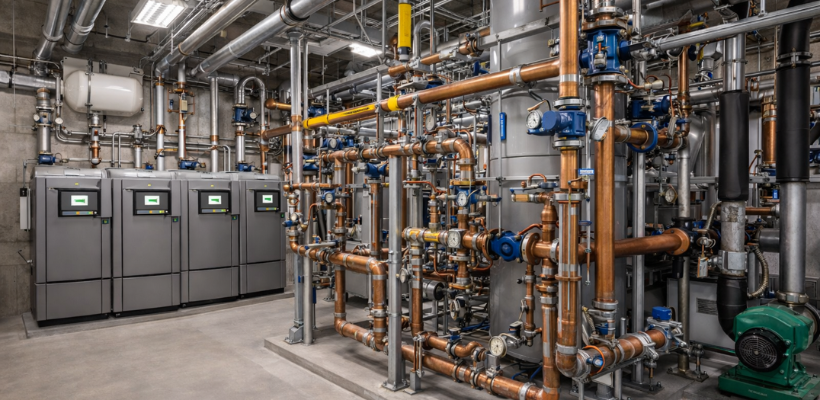
Commercial properties rely on durable plumbing infrastructure. Water must move consistently through supply and drainage systems. When corrosion develops, that reliability declines.
Many facility managers underestimate the extent of corrosion in commercial plumbing systems. They often focus on visible leaks. However, internal deterioration usually begins long before symptoms appear.
Corrosion affects pipe strength, water quality, and pressure stability. Over time, this damage increases repair costs and operational risk. Professional commercial plumbing services help detect these risks early through structured inspections and testing.
Understanding the causes of corrosion allows property managers to protect infrastructure. Preventive planning always costs less than emergency replacement.
Why Corrosion Is a Major Commercial Infrastructure Risk
Corrosion is not only surface rust. It is a chemical reaction that weakens metal from the inside out.
Commercial systems operate under constant demand. Offices, industrial facilities, and retail buildings use water continuously. High usage accelerates wear.
When corrosion progresses, pipe walls thin. This reduces structural capacity. Eventually, pinhole leaks or pipe bursts occur.
Water Quality Implications
Corroded pipes release metal particles into water. This may cause brown or reddish discoloration. Tenants often report a metallic taste.
Drinking water in Canada is generally safe. Maintaining plumbing integrity supports that safety benchmark inside commercial buildings.
Financial and Operational Consequences
Unplanned plumbing failures disrupt tenants and business operations. Restaurants may close temporarily. Office productivity declines during shutdowns.
Water damage remediation costs often exceed the cost of replacing the pipes. Insurance claims also increase when preventive maintenance is neglected.
Common Causes of Corrosion in Commercial Plumbing Systems
Corrosion develops when environmental and mechanical factors combine. Below are the most significant contributors to pipe corrosion in commercial buildings.
Water Acidity and pH Imbalance
Water chemistry directly influences metal durability. Low pH water becomes acidic. Acidic water reacts aggressively with metal surfaces.
Even slightly acidic conditions can accelerate deterioration. Over time, internal pitting develops.
Routine water testing identifies chemical imbalance early. Correction reduces long-term pipe damage.
Dissolved Oxygen and Oxidation
Oxygen is essential for corrosion. When dissolved oxygen contacts metal, oxidation begins. This forms rust inside pipes.
Closed systems reduce oxygen exposure. However, commercial supply systems introduce fresh oxygen continuously.
High-temperature water increases chemical reaction speed. Boiler systems may experience accelerated corrosion without proper treatment.
Galvanic Corrosion from Dissimilar Metals
Galvanic corrosion occurs when two different metals are connected. An electrochemical reaction develops between them. The weaker metal corrodes faster.
This issue often appears after partial renovations. Mixing copper and galvanized steel increases risk.
Using dielectric unions prevents direct metal contact. Material compatibility must always be evaluated during upgrades.
High Water Velocity and Turbulence
Excessive water velocity strips protective interior coatings. Turbulent flow increases erosion at fittings and elbows.
Erosion corrosion is common in high-demand commercial systems. Pressure spikes also increase internal stress.
Pressure regulation devices protect piping infrastructure. Balanced system design reduces mechanical strain.
Mineral Content and Scaling
Hard water contains dissolved minerals. Hard water contains high levels of calcium and magnesium. Mineral deposits form scale inside pipes. Scale traps moisture against metal surfaces. This creates localized corrosion zones.
Water softening systems reduce mineral buildup. Regular descaling prevents progressive narrowing of pipe interiors.
Microbiologically Influenced Corrosion
Certain bacteria accelerate corrosion processes. Microorganisms create acidic byproducts. These compounds attack metal surfaces.
Industrial and large commercial buildings may experience this condition. Routine inspection and testing identify microbial activity early.
Aging Infrastructure
No plumbing system lasts forever. Protective linings deteriorate over decades. Joint seals weaken under pressure cycles.
The Alberta Safety Codes framework reinforces durability expectations. Plumbing systems shall be designed and installed to provide an adequate supply of water.
Proper design supports long-term performance. However, maintenance remains essential throughout the system lifecycle.
Signs of Corrosion in Commercial Plumbing Systems
Early detection prevents catastrophic failure. Watch for subtle warning signs.
- Water discoloration during initial fixture use
- Recurring leaks in similar pipe sections
- Unexplained drops in water pressure
- Visible flaking or rust on exposed pipes
- Frequent valve or fitting failure
These symptoms indicate internal deterioration. Delaying inspection increases repair complexity.
How Corrosion Impacts Water Pressure and System Efficiency
Preventing corrosion in commercial plumbing systems requires a proactive and structured strategy. Reactive repairs are costly and disruptive. A preventive plan protects both infrastructure and operations.
Effective prevention combines inspection, water chemistry control, proper material selection, and system monitoring. Each element supports long-term durability.
Scheduled System Inspections
Routine inspections identify early signs of pipe deterioration. Surface discoloration, joint fatigue, and minor leaks often appear before major failure.
Professional contractors assess pipe walls, fittings, valves, and connection points. Internal camera inspections help detect pitting and scale buildup.
Ultrasonic thickness testing measures pipe wall reduction. This method identifies thinning before rupture occurs.
Thermal imaging detects hidden moisture behind walls or ceilings. Early moisture detection prevents structural damage.
Inspection frequency should match building usage intensity. High-demand facilities require more frequent evaluation.
Water Quality Testing and Treatment
Water chemistry directly influences corrosion rate. Testing measures pH levels, hardness, alkalinity, and dissolved oxygen.
Even small chemical imbalances accelerate oxidation. Continuous exposure to aggressive water shortens pipe lifespan.
Treatment systems adjust chemical composition to stabilize water. Neutralizing acidic water reduces metal reactivity.
Water softening equipment limits calcium and magnesium deposits. Reduced scaling decreases localized corrosion zones.
Corrosion inhibitors may be introduced in closed-loop systems. These protective chemicals create a barrier on pipe interiors.
Regular monitoring ensures treatment systems perform correctly. Testing should occur at scheduled intervals, not only during complaints.
Material Compatibility Planning
Material selection significantly affects durability. Mixing incompatible metals increases galvanic corrosion risk.
Copper connected directly to galvanized steel accelerates metal breakdown. Dielectric fittings prevent electrical interaction between metals.
Corrosion-resistant materials such as certain stainless alloys may improve longevity. However, compatibility must always be verified.
When retrofitting sections of piping, evaluate the entire system composition. Partial replacements without planning create weak points.
Consult experienced professionals before replacing sections. A system-wide review prevents unintended corrosion pathways.
Pressure and Flow Monitoring
Water pressure must remain within recommended operating ranges. Excess pressure increases internal stress on pipe walls.
High velocity flow strips protective interior layers. Turbulence at elbows and valves increases erosion corrosion.
Pressure regulation valves stabilize system performance. Flow balancing devices distribute water evenly throughout the building.
Smart monitoring systems track pressure fluctuations in real time. Early alerts allow corrective action before damage spreads.
Balanced hydraulic design reduces long-term wear. Stable flow conditions significantly extend infrastructure lifespan.
Preventive Maintenance Planning
A structured commercial plumbing maintenance plan integrates inspections, testing, and monitoring into one coordinated program.
Maintenance schedules should reflect building type and usage patterns. Industrial facilities often require more intensive oversight than office buildings.
Documentation of inspection findings supports compliance and budgeting. Historical data helps predict replacement timelines.
Preventive oversight reduces emergency repairs and insurance claims. It also protects tenant satisfaction and operational continuity.
Corrosion prevention is not a single action. It is a continuous management process that protects commercial assets over decades.
When to Contact a Commercial Plumbing Contractor
Some corrosion issues require immediate intervention. Persistent leaks indicate advanced deterioration. Sudden pressure drops suggest pipe thinning.
Water testing abnormalities also require professional review. Ignoring early warning signs increases replacement costs.
Experienced contractors evaluate full system integrity. Comprehensive assessment prevents partial and ineffective repairs.
About One Mechanical
One Mechanical provides specialized support for commercial plumbing systems in Edmonton. The team understands the demands placed on large-scale infrastructure. Preventive maintenance and system assessment form the foundation of their approach.
Corrosion management requires technical accuracy and consistent oversight. One Mechanical works with property managers and facility operators to protect long-term system performance. For professional consultation, contact us to discuss your building’s plumbing requirements.