
Providing Premium Commercial Gas Fitting For High Demand Projects
July 2, 2026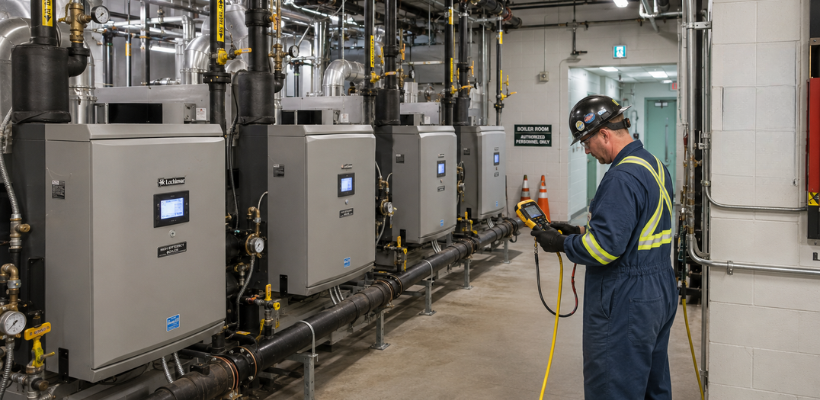
In the landscape of large-scale industrial development and institutional infrastructure, the margin between operational success and catastrophic failure is often measured in BTUs per hour. For facilities operating under extreme load conditions, such as district energy plants, hospital laundry systems, or food production warehouses, the integrity of the fuel delivery network is non-negotiable. Engaging expert commercial gas fitting services for high demand projects ensures that your mechanical systems are engineered for sustained peak output, regulatory adherence, and absolute life safety. One Mechanical delivers this calibre of precision across Saskatoon, transforming complex gas distribution challenges into seamless, code-compliant installations.
The Unique Demands of High-Load Gas Infrastructure
Standard residential or light-commercial gas work operates on a fundamentally different curve than high-demand projects. When a system must fuel multiple 2-million-BTU make-up air units, industrial fryers, or emergency generators capable of powering an entire retail complex, the variables of pipe sizing, pressure drop, and ventilation interoperability become critical engineering challenges. A miscalculation of less than five per cent in gas line capacity can produce flame failure, incomplete combustion, or dangerous soot accumulation.
High-demand environments require commercial gas fitting that accounts for:
- Extended pipe run lengths with minimised friction loss
- Dual-pressure regulator systems for variable load equipment
- Properly sized venting for appliance induced draft
- Seismic restraint on gas piping in accordance with provincial building codes
One Mechanical employs certified gasfitters who calculate these parameters using the Canadian Fuel Gas Code (CSA B149.1). Each system is designed not merely for the current load but for a projected twenty-year operational lifecycle, accommodating future equipment additions without wholesale repiping.
Regulatory Mandates and Safety Protocols
Canadian federal and provincial regulations impose stringent oversight on commercial gas installations. The Technical Standards and Safety Authority (TSSA) in Ontario, along with equivalent bodies in each province, mandate that any commercial gas fitting project involving pressures exceeding 5 PSI or aggregate input ratings above 1,000,000 BTU require full engineering documentation and third-party inspection at multiple hold points.
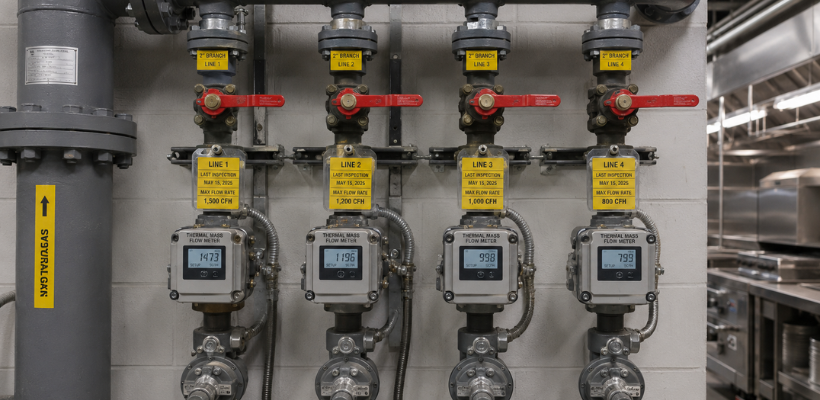
One Mechanical integrates these compliance measures from the design phase onward. Every high-demand project undergoes:
- Load verification: Cross-referencing equipment nameplate data with actual operating pressures.
- Material traceability: Recording lot numbers for all pipe, fittings, and valves.
- Purge and leak detection: Utilising electronic combustible gas indicators rather than soap-and-water methods alone.
- Pressure logging: Charting standing and operating pressure over a 72-hour validation window.
For a deeper understanding of federal energy efficiency standards that intersect with gas system design, consult Natural Resources Canada’s Office of Energy Efficiency, which publishes mandatory compliance guidelines for commercial space heating and water heating equipment.
Material Selection for Corrosive and High-Temperature Environments
A recurrent failure in non-specialist commercial installations is the use of inappropriate materials for the specific gas chemistry or ambient conditions. Natural gas contains trace mercaptans and moisture, liquid petroleum gas exerts higher vapour pressure. In high-demand settings such as chemical plants or food dehydration facilities, ambient airborne chlorides or acidic vapours can rapidly degrade standard fittings.
We specify commercial gas fitting components based on aggressive condition analysis. For coastal or high-humidity sites, we utilise hot-dipped galvanised schedule 40 pipe with proprietary anti-creep thread compounds. For applications involving elevated ambient temperatures near ovens or dryers, we select CSST (corrugated stainless steel tubing) only where thermal expansion loops are mathematically validated. Our default standard for buried gas mains supplying large campuses is factory-coated steel with cathodic protection test stations.
These material decisions are documented in a Project Quality Plan, signed by a Professional Engineer registered in the province of work. The resultant system resists pinhole leakage, thread galling, and differential settlement cracking.
Integration With Building Automation and Emergency Shutoffs
Contemporary high-demand facilities cannot tolerate manual gas shutoff protocols during a crisis. A modern commercial gas fitting strategy must interface directly with building automation systems (BAS) and fire alarm panels. We install electric solenoid shutoff valves that receive trip signals from multiple sources, manual pull stations, gas detection sensors, fire suppression system release, and even remote SCADA commands from off-site control rooms.
We further equip each high-demand installation with:
- Manual reset valves that require physical inspection before re-commissioning
- Excess flow valves that trip automatically if downstream pipe shears
- Pressure relief vent lines routed to building exterior, terminating above roofline
- Lockable emergency block valves at both service entrance and equipment branch lines
This layered approach satisfies insurance underwriter requirements and reduces liability exposure for property owners. In the event of an earthquake, fire, or gas detection event, the system self-isolates within three seconds.
Phased Installation for Live Facilities
Perhaps the greatest test of commercial gas fitting expertise occurs when a high-demand project must be executed in a live, revenue-generating environment. A hospital cannot shut down its sterilisation plant for three weeks. A cold storage warehouse cannot lose refrigeration for a weekend. One Mechanical specialises in phased gas line installations that maintain critical services through temporary bypass systems.
Our approach includes:
- Weekend only tie-ins: Performing the final connection during scheduled 48-hour windows with 24/7 safety watch
- Temporary mobile gas supplies: Renting and plumbing redundant propane-air systems to bridge the transition
- Hot tapping: Using specialised equipment to connect new branch lines to a pressurised main without shutdown
- Staged valve insertion: Installing isolation valves on live lines using pressurised drilling techniques
Each of these methods requires a bespoke safety plan approved by the local gas utility and the authority having jurisdiction. We carry specific liability coverage for hot work on pressurised gas systems, a distinction that separates us from general plumbing contractors.
Post-Installation Support and Continuous Monitoring
The completion of installation marks the beginning of our long-term stewardship. High-demand gas systems exhibit performance drift over time due to regulator seat wear, debris accumulation in drip legs, and seasonal pressure fluctuations from utility supply. One Mechanical offers ongoing commercial gas fitting maintenance contracts that include semi-annual manometer verification, thermal imaging of pipe joints, and combustion analysis of connected appliances.
We also equip client facilities with remote monitoring gateways that report real-time gas pressure, flow rate, and valve status to our service desk. When pressure deviates more than ten per cent from setpoint, our system generates a service ticket before equipment lockout occurs.
Conclusion
High-demand commercial gas projects require more than licensed labour, they demand engineering rigour, material science knowledge, and regulatory fluency. One Mechanical provides commercial gas fitting services that prioritise longevity, safety, and operational continuity for Canada’s most critical facilities. From district boiler plants to university central utility buildings, our installations withstand the tests of pressure, time, and inspection. Contact us today to schedule a site assessment and pressure load calculation for your next high-stakes project.